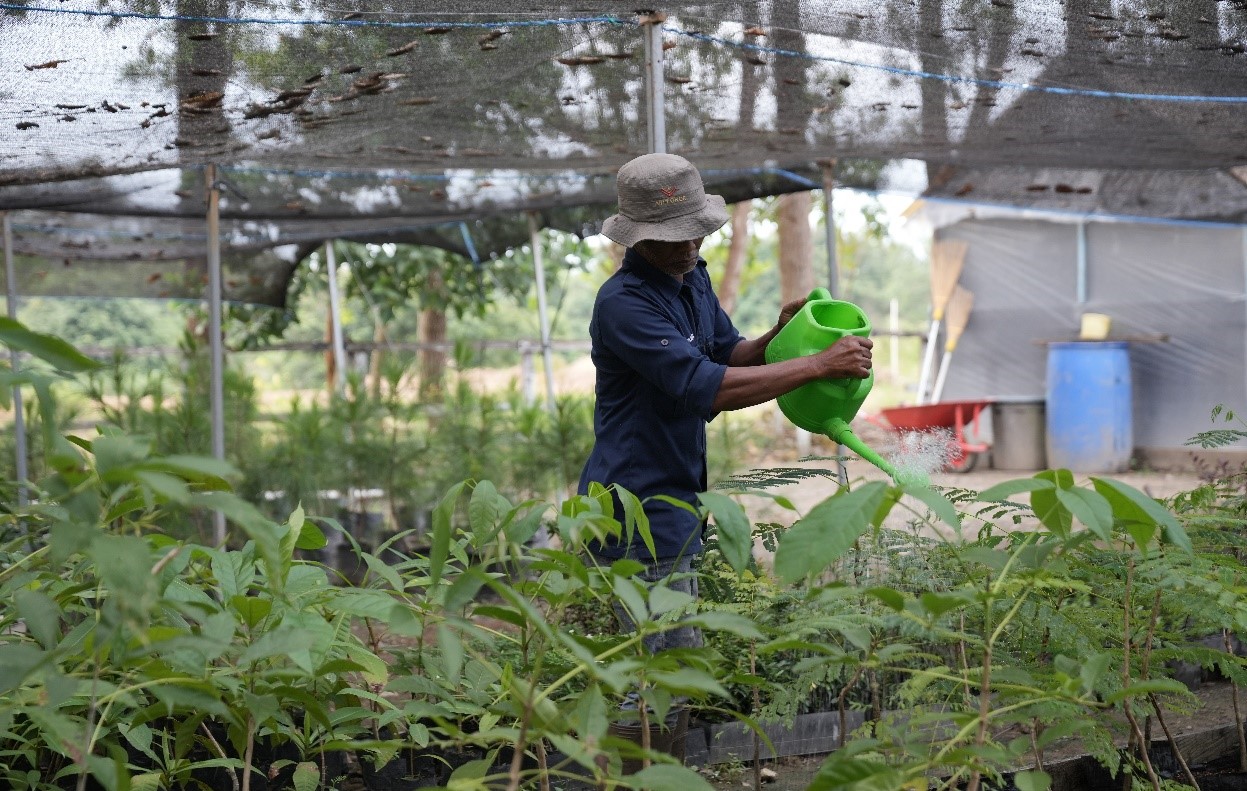
WEST KOTAWARINGIN – It doesn’t take a policy or high-end technology to make sustainable development possible. Sometimes, the answer is gardens – the origin of many living beings. It’s through planting seedlings that Korintiga Hutani safeguards and makes meaningful work in the local ecosystem, particularly riverbanks in its operational area.
These geological features serve as buffer zones along natural water streams, protecting them against erosion, scouring, and pollution while maintaining their beauty and biodiversity.
Having trees here will mean a stronger barrier against soil wear, which also filters out pollutants, enhances water quality, and ensures a home for multiple organisms.
Korintiga Hutani plans to use durian seedlings from its mini-nursery, said Fahad Ardian, whose division, Community Development, leads the work. These include Getar Bumi, Kusi, Pompaan, and Paken (lai), carefully grown and maintained at the facility.
“We’re growing these plants as an ecosystem recovery strategy, aside from for consumption. They will help us meet carbon emissions targets and rehabilitate the shoreline,” Fahad explained.
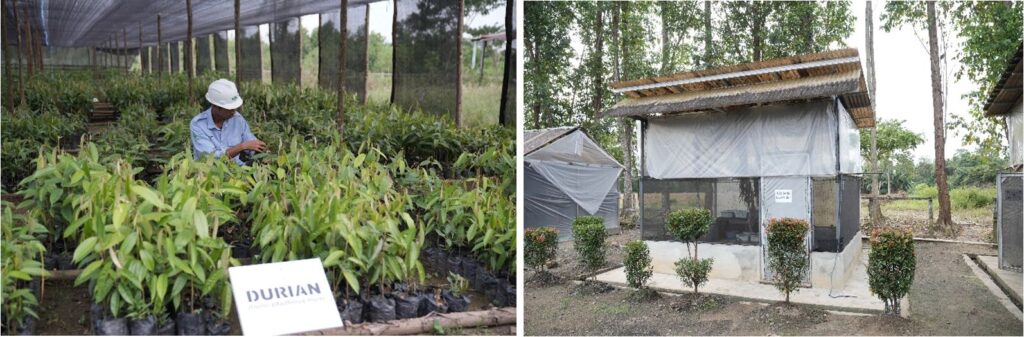
The timber firm also uses black soldier flies to restore its surrounding environment. Since 2017, a system has been in place to convert organic trash from executive and worker housing into nutrition-rich maggots that feed chickens and fish. By utilizing items commonly perceived as a burden, Korintiga Hutani has successfully implemented the circular economy model, which views waste as part of a sustainable production cycle.
This, along with tree planting, fish farming, and worker empowerment, is how the company addresses pressing challenges and manages industrial operations without sacrificing the environment. (PR)