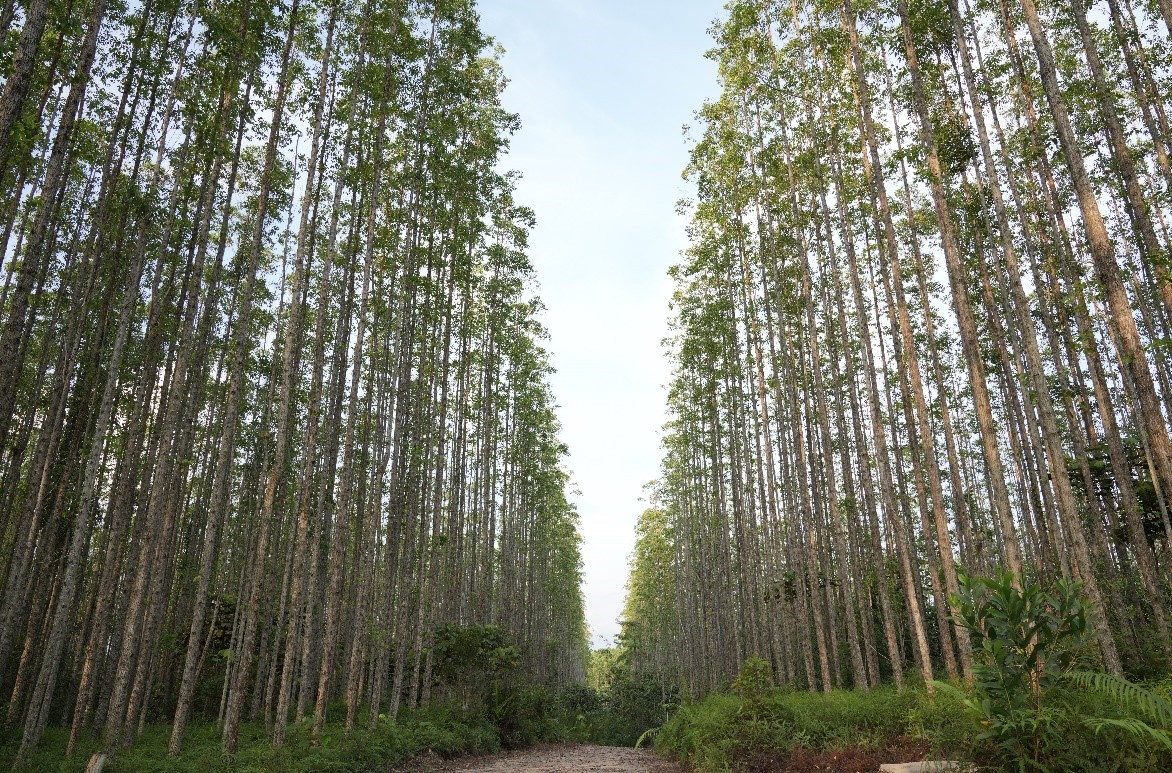
WEST KOTAWARINGIN – Only a hundred kilometers from Pangkalan Bun, lays Riam, a village thriving on hutan tanaman rakyat or community plantation forests. Run under a partnership scheme with Korintiga Hutani, these areas offer a way out of financial difficulties and age barriers.
That’s because they’re more than industrial planting projects. In Riam, community plantation forestry ensures a fair arrangement of village land use and provides lifeblood for many households.
“Our programs are all tailored to community needs, but community plantation forests and forests subject to rights (Indonesian: hutan hak) are the most beneficial economic-wise,” said Erwansyah Ardi, Korintiga Hutani’s public relations and forest community empowerment manager.
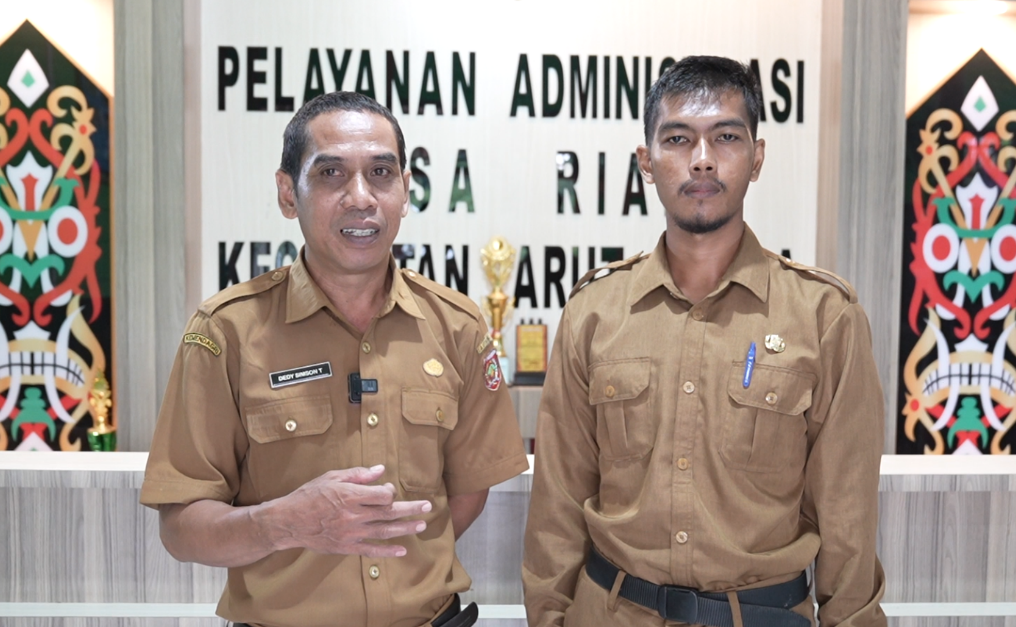
This model of forest management is simple, yet impactful. Locals provide the land and the firm does the rest: preparing saplings, planting, maintaining, and harvesting. Owners who help out receive a monetary payment. “We get to reap the fruits once every six years,” said Riam village leader Dedy Simson.
This program is popular with residents, even more than oil palm farming. “Oil palms require heavy maintenance, which is a struggle because some of us are old [and can’t keep up with the workload].”
It runs alongside a forestry revenue sharing scheme, which the company also sets up with other villages. This partnership is part of an effort to resolve social and land conflicts, which often revolve around the fulfillment of community rights, community compliance with obligations, and land ownership and use.
Each village will receive income based on their share of land within company concessions. The use of this income varies between regions.
In Riam, for example, funds are earmarked for schooling, village administration, and the upkeep of religious facilities. Their allocation is determined through open community discussions and publicly made consensus.
Like so, Korintiga Hutani and Riam’s synergy proves the power of sustainable management. Built on transparency, participation, and equitable distribution, this bond keeps forest cover intact and strengthens ties between residents.
Forests are beyond resources – they’re a symbol of hope and sustainability. Managed with social justice and consensus decision-making, these pockets of life become a thread that holds our social and ecological fabric together. (PR)