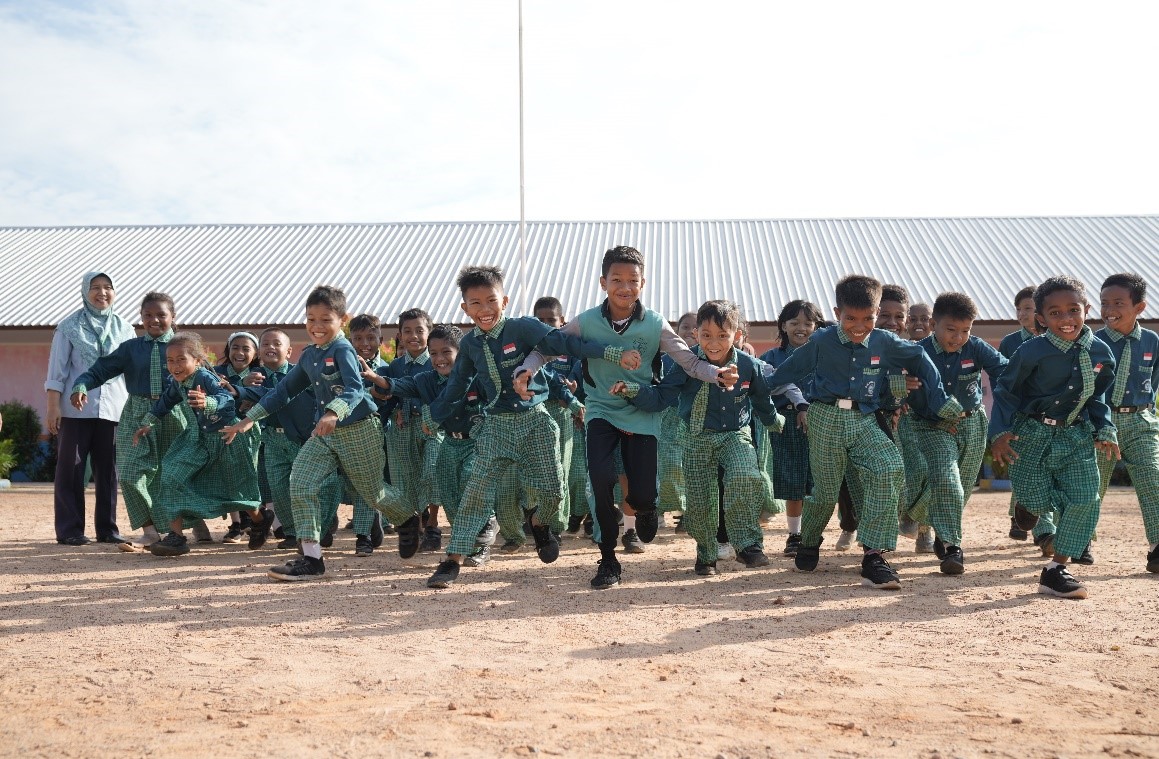
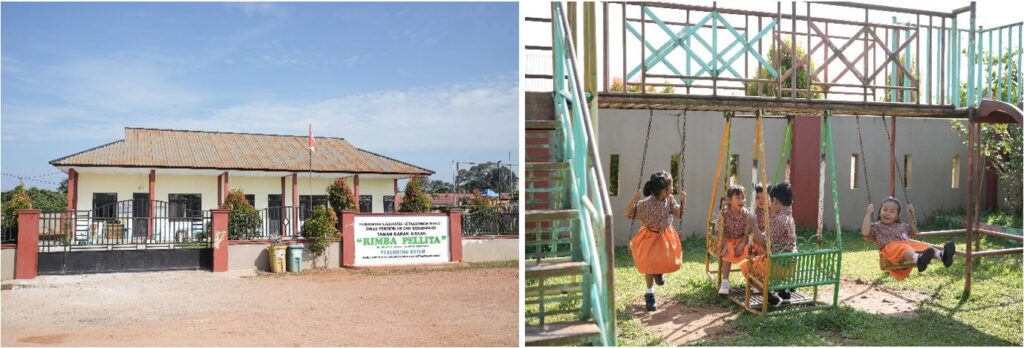
WEST KOTAWARINGIN – Rimba Pelita is an elementary institution established by Korintiga Hutani (KTH) to meet its employees’ needs for child education. A team of one principal, one administrative staff, and nine teachers runs the facility serving 184 students.
Through this school, the company is making long-term investments with substantial gains for its workforce and their families. The approach creates a healthy, reciprocal relationship that values workers, affords their children a brighter future, and builds a loyal and productive labor force – with less turnovers.
But what’s better is that these benefits have expanded to include rural community support, partly owing to the fundamental impacts of education that transcend boundaries.
“The majority of our students here are the children of Korintiga Hutani employees. But a portion also comes from surrounding villages, like Nanga Mua,” explained Rimba Pelita principal Mardikawono.
Korintiga Hutani provides comprehensive support; it covers teacher salaries, school supplies and facilities (e.g. books, uniforms), even student meals. Everything in the school is free for all children.
“We receive full support from the company, whether it’s school uniforms, learning materials, or supplementary food, which is provided twice a month. And these are enjoyed by native kids as well, whose parents don’t work at the company.”
The same kids, along with their non-native counterparts, paid back this support with trophies and accolades. At the recent district-level National School Sports Olympics (O2SN), a team from Rimba Pelita snatched the overall winner title, proving how rural education should not be undermined and how Korintiga Hutani’s “social investment” is also marked by improvements in student skill and competitiveness besides physical infrastructure. (PR)