Towards Responsible Management of Industrial Plantation Forests

PT Korintiga Hutani (KTH) is fully dedicated to implementing the FSC Remedy Framework with the Forest Stewardship Council® (FSC®) to ensure a sustainable environmental and social future.

The success of this initiative will be key to achieving the company’s Second Mission: enhancing industry capabilities to enable long-term added value creation and increase contribution to Indonesia’s foreign exchange earnings.

Overview

Our Restoration Commitment

In September 2025, KTH and FSC® formally agreed to carry out forest restoration efforts in line with the FSC Remedy Framework (FSC-PRO-01-007 V1-0), hence addressing the environmental and social impacts associated with past forest conversions.

Key Implementation Focuses

We commit to transparency at every step of the baseline assessments that revolves around forest conversion history to ensure accurate, accountable information.

We involve local communities, environmental experts, and other relevant stakeholders through a meaningful consultation process that adheres to Free, Prior and Informed Consent (FPIC).

We align all our operations with the governance standards of FSC® to meet the required threshold for forest management certification.

Expected Outcomes

  1. Recovery of environments and ecosystems from past impacts.
  2. Fair, transparent, and inclusive restitution to affected communities.
  3.  Stronger relationship with local communities and stakeholders.
  4. Meraih sertifikasi terbaik FSC dalam pengelolaan hutan yang bertanggung jawab dan berkelanjutan.
  5. Advancements in the domestic forestry sector.
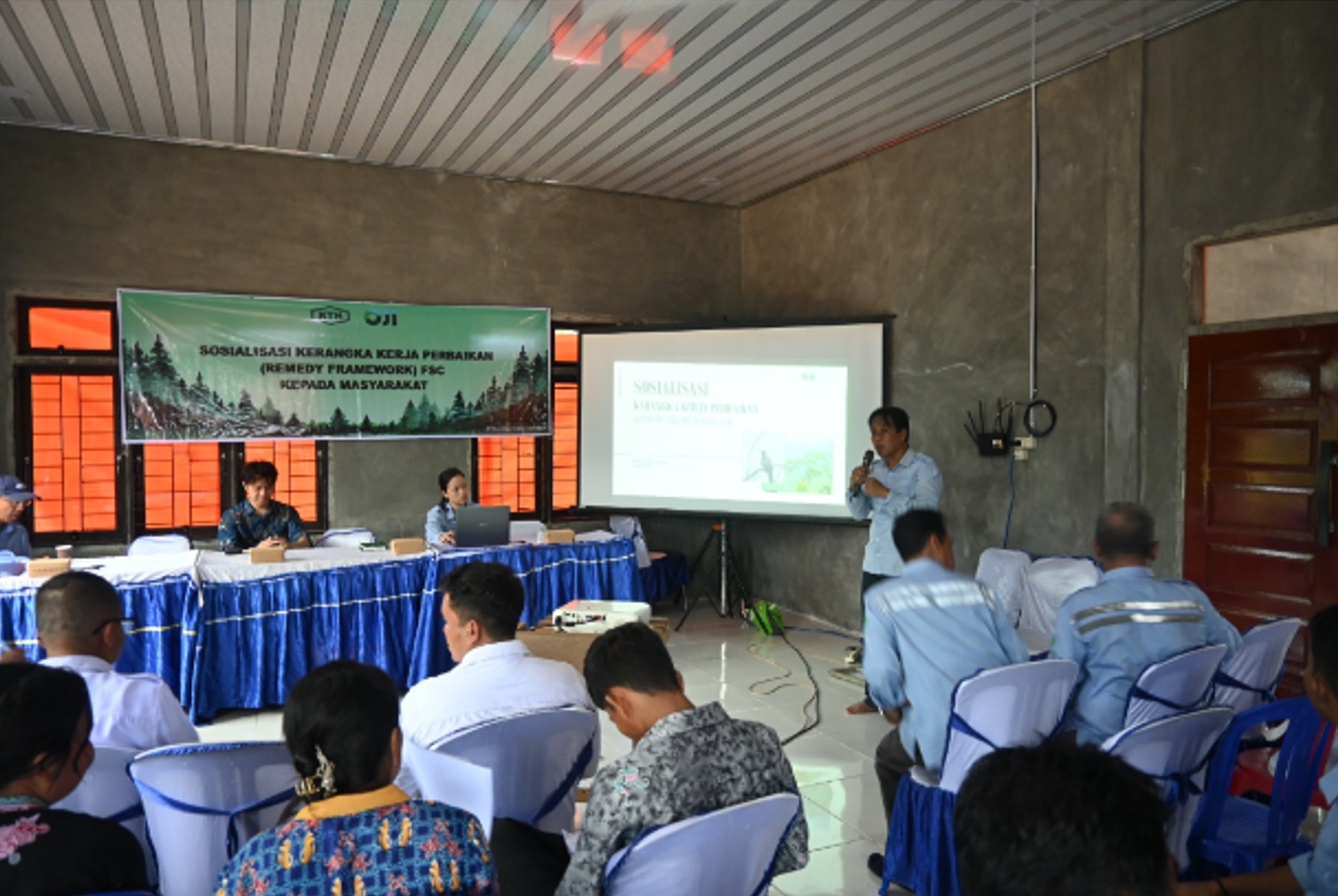
Dissemination of the FSC Remedy Framework for Community Forest Groups (KTH)

Remedy Process

What is the FSC Remedy Framework?

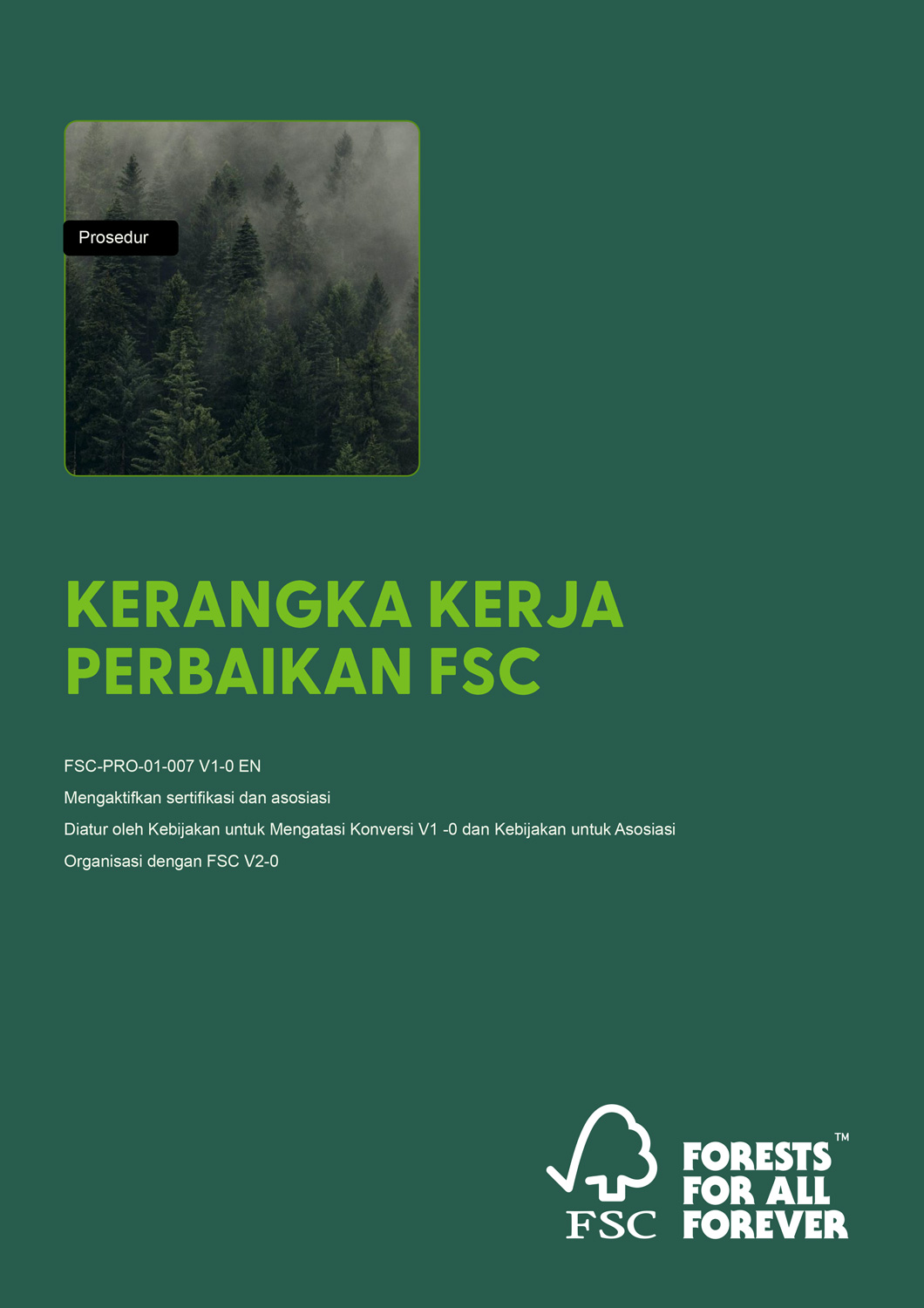
FSC Remedy Framework is developed by the Forest Stewardship Council® (FSC®) and is outlined under FSC-PRO-01-007 V1-0 EN. This framework aims to remediate environmental and social harms caused by unacceptable activities and past forest conversions as defined by the Policy to Address Conversion (FSC-POL-01-007 V1-0).

FSC Remedy Framework defines the permanent, effective measures required for implementation by entities involved in land conversions between December 1, 1994 and December 31, 2020, or those conducting past unacceptable activities as described by the FSC Policy for Association 2 (FSC-POL-01-004 V2).

Key Focuses

Remedy is delivered in two key areas to restore the loss of conservation values:

Environmental

Environmental remedy seeks to improve ecosystem conditions following disturbances caused by past land activities. Actions may include:

  • Restoration of forest areas and wildlife habitats
  • Rehabilitation of riparian zones, wetlands, and HCV-areas
  • Enhancement of biodiversity protection
  • Regular monitoring and evaluation of environmental restoration initiatives

Social remedy seeks to redress the harms experienced by affected communities due to past land activities. Actions may include:

  • Identification of affected parties
  • Dialogue and consultation with stakeholders
  • Clear resolution of grievances and conflicts
  • Creation and implementation of remedy agreements through an FPIC process
(FPIC)

+ Free, Prior and Informed Consent

A principle that guarantees the rights of a community to grant or withhold approval for any project or activity that affects their other rights, territories, resources, and interests.

FPIC assures that:

  • Any community decision is made free of coercion.
  • Information on the project is fully and clearly delivered.
  • Consultation takes place before decision-making and project execution.
  • Community approvals are obtained through a legitimate, mutually agreed upon process.

Overview of KTH’s Remedy Process

Our remedy process entails several key stages:

  1. Identification of social and environmental impacts
  2. Data collection and field verification
  3. Consultation with stakeholders
  4. Remedy planning
  5. Implementation of the remedy plan
  6. Monitoring and evaluation of outcomes
  7. Reporting and continuous improvement

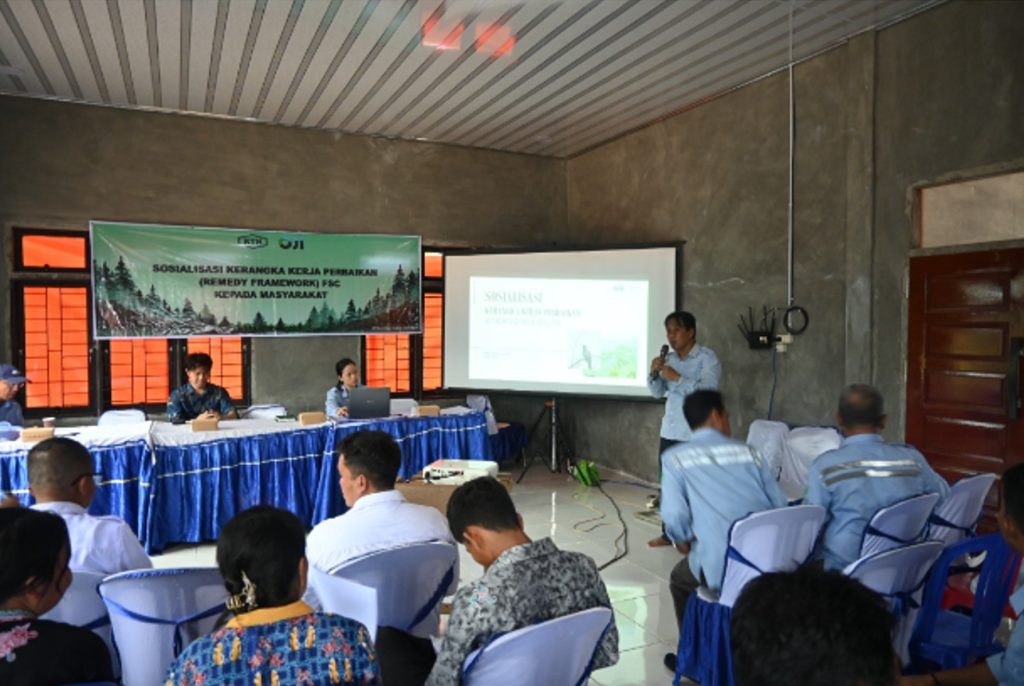
As part of our commitment to complying with the FSC Remedy Framework, we have initiated community outreach on the Framework, involving 12 villages and one subdistrict near our concession area on April 28–30, 2026 and May 4, 2026. This initiative marks a start to our work to establish the pre-conditions for the Remedy Process.

Progress Report

We have commenced the Remedy Process as part of our pledge to follow the FSC Remedy Framework.

September 15, 2025
Officially Initiating the Remedy Process

PT Korintiga Hutani (KTH) dan Forest Stewardship Council (FSC) secara resmi telah menandatangani Nota Kesepahaman (Memorandum of Understanding atau MoU) yang menandai dimulainya proses pemulihan (remedy process) secara komprehensif.

September 15, 2025
April 28, 2026
Pre-Conditions and Community Outreach

PT Korintiga Hutani (KTH) has rolled out community outreach sessions on the FSC Remedy Framework, targeting 12 villages and 1 subdistrict near our concession areas on April 28-30, 2026 and May 4, 2026. This initiative marks a start to its work to establish the pre-conditions for the Remedy Process.

April 28, 2026

Grievance Mechanism

In line with the FSC Remedy Framework, we have designed a grievance mechanism that is culturally appropriate and accessible for affected communities and their legitimate representatives.

This mechanism follows several principles:

  • It remains active throughout the remedy process.

  • All grievances, including those specifically related to the remedy process, are addressed.

  • It provides a written procedure to enable access to conflict resolution and remediation.

  • It ensures clarity, accessibility, and security, in addition to confidentiality and protection for complainants.

  • It continuously aligns remediation approaches, processes, and outcomes with the UN Guiding Principles on Business and Human Rights (UNGPs). Approaches and processes must first be grounded in Free, Prior, and Informed Consent (FPIC) principles.

We pledge to cultivate a transparent work culture

Stakeholders and rights-holders may use the Grievance Mechanism to raise concerns about the FSC Dispute Resolution System.

Resources

Documents